
The Long Way Home: 8 Powerful Life Lessons from Christopher Nolan’s The Odyssey
You can survive wars, monsters and storms—and still spend years running from yourself.
Warning: This article contains major spoilers for Christopher Nolan’s The Odyssey, including its ending.
Christopher Nolan’s The Odyssey may look like a story about a man attempting to cross an unforgiving sea, but its most important journey happens inside Odysseus.
Yes, the film contains armies, shipwrecks, monsters, violent suitors and seemingly impossible obstacles. But Nolan is less interested in whether Odysseus can physically reach Ithaca than in whether he can emotionally return to the man he once was.
Matt Damon’s Odysseus does not come home as a triumphant warrior. He returns as a wounded man carrying the memories of a war he helped win—and the guilt of what that victory cost.
Nolan’s film makes this conflict deeply personal. The gods are largely removed as physical characters, turning many of the supernatural elements into manifestations of nature, memory and psychological trauma. Athena may not be a goddess guiding Odysseus at all.
She may be the face his conscience has given to a murdered young woman he cannot forget.
This is therefore not simply a story about finding your way home.
It is a story about what happens when you finally stop running.

1. The Hardest Person to Face Is Yourself
Odysseus faces terrifying enemies throughout the film, but none of them frightens him as much as the prospect of returning home.
For years, he tells himself that Ithaca is his destination. Yet when he finally reaches it, he admits that part of him never truly wanted to return.
Why?
Because returning means facing Penelope.
It means looking at his son and seeing all the years he missed.
Most painfully, it means admitting that the legendary warrior celebrated for defeating Troy was also responsible for terrible destruction.
This is one of the film’s most honest lessons: we sometimes remain busy because movement protects us from reflection.
We throw ourselves into work, ambitions, entertainment and endless new goals. We convince ourselves that we are progressing because we are always moving. But it is possible to travel an enormous distance without moving any closer to the truth.
Personal growth begins when we stop asking, “How do I escape this?” and start asking, “What am I afraid to confront?”
The monsters outside us may be dangerous.
The truths inside us are often more frightening.
2. Winning Does Not Automatically Make You Right
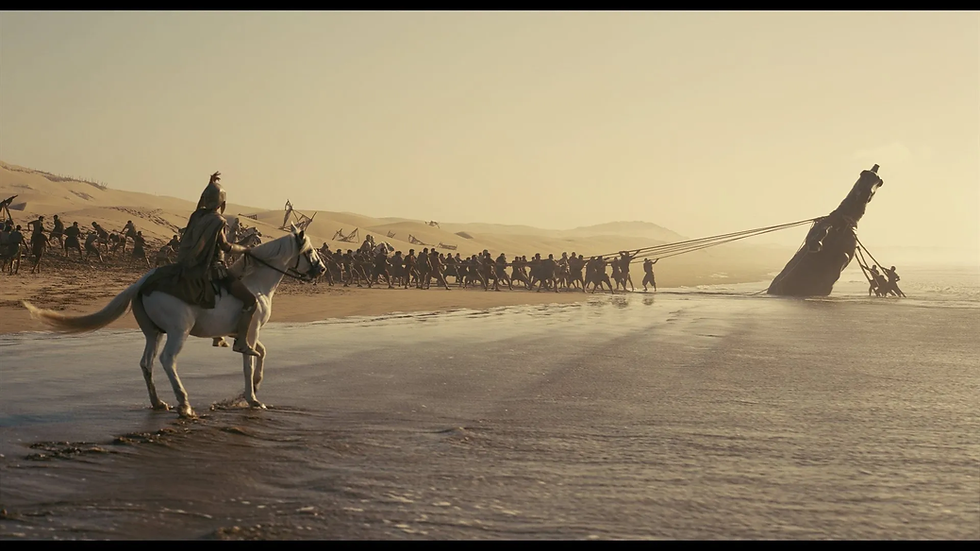
Odysseus helped win the Trojan War. History will remember him as a brilliant strategist. His name will become a legend.
But Nolan refuses to present victory as proof of goodness.
When Odysseus recounts the destruction of Troy, he does not describe a glorious military achievement. He remembers innocent people being slaughtered. He remembers his men violating the sacred law of hospitality and destroying the trust that allows civilisation to exist.
He won the war, but part of him was lost in the victory.
That distinction matters far beyond the battlefield.
We can win an argument and damage a relationship.
We can achieve professional success while neglecting our family.
We can reach a goal through methods that slowly turn us into someone we no longer respect.
Modern life often teaches us to measure success through visible results: money, status, promotions, awards or recognition. The Odyssey asks us to use a more difficult measurement:
Who did you become while pursuing those results?
Achievement without integrity is not genuine success. Sometimes it is simply failure wearing the armour of victory.
3. You Cannot Heal from What You Refuse to Remember
When we first encounter Odysseus living with Calypso, he has lost much of his identity. The forgetting initially appears merciful.
Without his memories, he does not have to feel the weight of Troy.
He does not have to mourn his dead companions.
He does not have to remember the people who suffered because of his decisions.
But he also cannot return home.
The film suggests that our painful memories are not separate from our identity. When we bury them, we may temporarily reduce our suffering, but we also lose access to the parts of ourselves that could learn from that suffering.
Healing is not the same as forgetting.
It does not require us to relive every painful moment indefinitely. It requires us to recognise what happened, accept how it changed us and decide what we will do with that knowledge.
Odysseus cannot move forward until his memories return. Only then can his journey become more than physical survival. Only then can it become transformation.
We do not grow by pretending that our wounds never existed.
We grow by refusing to let those wounds make every future decision for us.
4. Sometimes the Monster Is Not Coming for Us - It Is Us
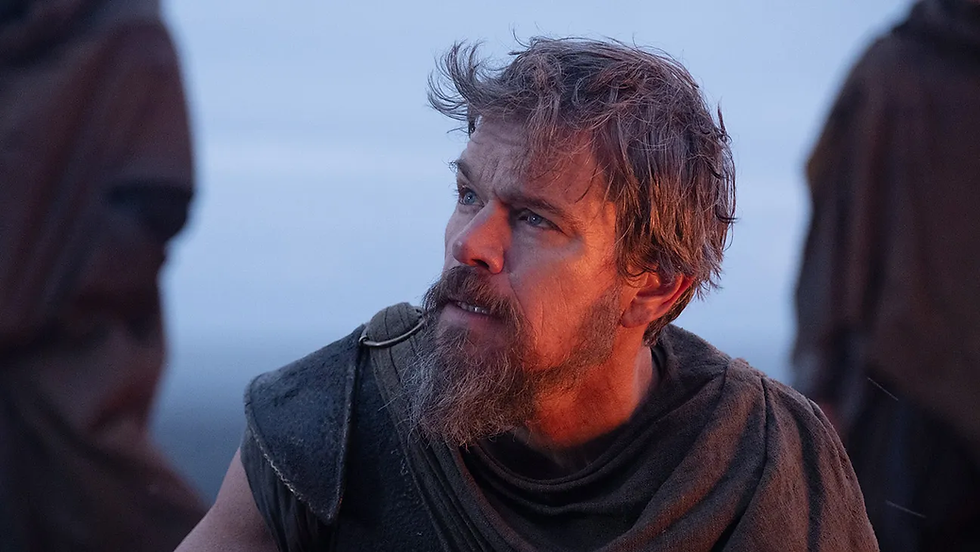
Throughout the film, characters fear the mysterious “people from the sea,” believing that these outsiders will bring destruction and collapse.
The revelation is devastating because the threat is not an unknown civilization arriving from somewhere beyond the horizon.
Odysseus and his warriors are the people from the sea.
Penelope expresses the truth he has spent years avoiding:
“You’re the people from the sea.”
Nolan transforms the idea into a warning about the human tendency to search for external enemies while ignoring the destruction caused by our own actions.
It is easier to believe that our problems are always created by someone else.
A difficult colleague.
An unfair system.
A selfish partner.
A hostile world.
Sometimes those explanations are true. But personal growth requires enough humility to ask a more uncomfortable question:
What if I am contributing to the problem I keep blaming on others?
Odysseus becomes wiser only when he stops seeing himself exclusively as the hero of the story. He must accept that he has also been the destroyer in someone else’s story.
Real self-awareness begins when we recognise that good intentions do not erase harmful consequences.
We are capable of courage and cruelty, wisdom and blindness, creation and destruction.
Maturity means accepting all of it—and choosing what kind of person we will become next.

5. Home Is Not Something You Find. It Is Something You Rebuild.
Odysseus spends the film trying to return to Ithaca, but reaching the island does not immediately restore his life.
His kingdom has changed.
Telemachus has grown up without him.
Penelope has survived years of uncertainty.
Suitors have invaded his home and attempted to claim everything he left behind.
Odysseus cannot simply walk through the door and expect time to reverse itself.
This is particularly visible in his reunion with Penelope. He must prove who he is, but identity is not the only obstacle between them. The man returning from Troy is not the same man who departed.
Neither is Penelope the same woman he left behind.
The film reminds us that returning is not the same as repairing.
Whether we are rebuilding a marriage, reconnecting with family or attempting to recover after years of emotional absence, we cannot demand that others continue from the exact point at which we disappeared.
Trust must be rebuilt.
Pain must be acknowledged.
The people we love must be allowed to tell us how our absence affected them.
Home is not merely a place where we are recognised.
It is a place where we accept responsibility for how we have changed—and how our choices have changed others.
6. Growth Sometimes Means Giving Up the Throne
Odysseus eventually defeats the suitors with Telemachus, but Nolan does not end the film by restoring him permanently to power.
Instead, Telemachus becomes king.
Odysseus and Penelope leave Ithaca together, sailing west so that Odysseus can honour the men he lost. The warrior returns home only to realise that his final purpose is not to reclaim his former position. It is to make peace with the past and allow the next generation to lead.
This may be the film’s most mature understanding of personal growth.
We frequently assume growth means acquiring more:
More influence.
More authority.
More recognition.
More control.
But there comes a time when growth means releasing something.
A title.
An outdated identity.
The need to be the most important person in the room.
The belief that everything will collapse without us.
Odysseus does not lose by surrendering the throne to his son. He finally succeeds because he no longer needs the throne to prove who he is.
A meaningful life is not measured only by what we build for ourselves.
It is also measured by what we prepare others to continue without us.

7. Guilt Must Become Responsibility
Odysseus is tormented by guilt, but guilt alone does not make him a better man.
Guilt can become another form of self-obsession. We can become so consumed by feeling terrible about the past that we never take meaningful action in the present.
Odysseus begins to change only when his remorse becomes responsibility.
He returns to his family.
He protects Telemachus.
He confronts the suitors.
He admits what happened at Troy.
He gives up the throne.
Finally, he sails west to honour those who never returned.
He cannot undo the destruction. No apology can resurrect the dead or restore the years he lost with his family.
But he can decide that the remainder of his life will not repeat the worst parts of his past.
That is the difference between shame and responsibility.
Shame says, “I am permanently broken.”
Responsibility says, “I caused harm, and what I do next still matters.”
We cannot change yesterday.
But yesterday does not have to control every tomorrow.
The Journey Does Not End When You Reach Home
By the end of The Odyssey, Odysseus has survived the sea, recovered his identity, defeated the suitors and reunited with his family.
Yet Nolan does not give him a conventional triumphant ending.
Odysseus leaves again.
This time, however, he is not escaping himself.
He is no longer sailing towards fame, conquest or personal glory. He sails beside Penelope, carrying the truth of what he has done and the responsibility to honour those who were lost.
That is what makes his final voyage different.
At the beginning, Odysseus believes his challenge is to survive long enough to return home.
By the end, he understands that survival was never enough.
He must become someone worthy of returning.
Perhaps that is the most powerful lesson of Nolan’s film:
Life is not only about reaching our destination. It is about becoming the person we hope will arrive there.
We will all lose our way at some point.
We will make choices we regret.
We will hurt people, misunderstand ourselves and spend years pursuing things that ultimately feel empty.
But being lost does not mean that we are beyond redemption.
There is still a path forward.
It begins the moment we stop running from the truth, accept responsibility for who we have been and choose—with courage—to become someone better.
The longest journey is not across the sea.
It is the journey back to ourselves.


Comments